Fiber-Optic Network Infrastructure
Deployment of Backbone and Regional Fiber-Optic Networks
Design and implementation of intercity and regional fiber-optic backbone networks
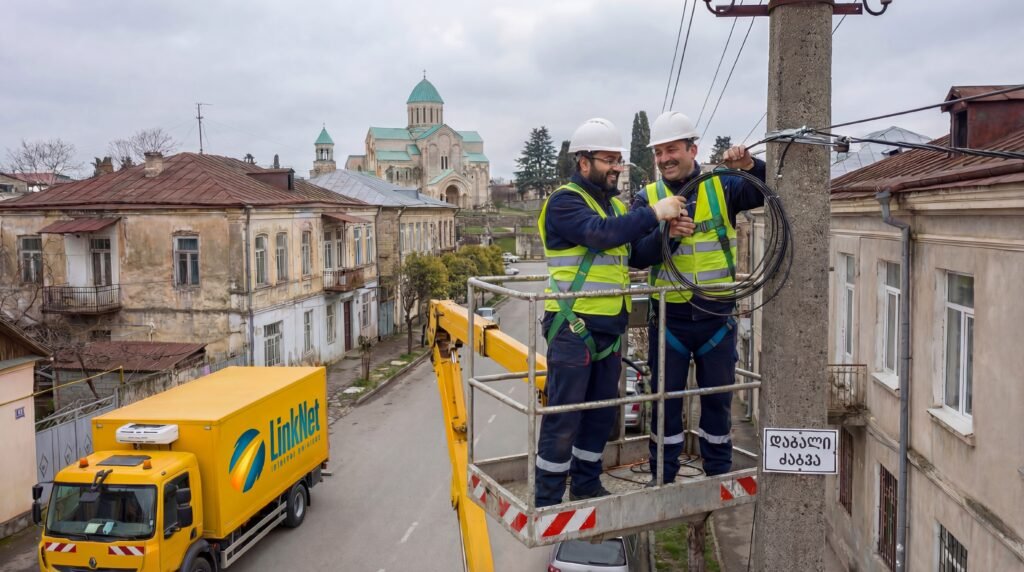
Installation of aerial fiber routes (on lighting poles, power supply poles, or customer-installed poles)
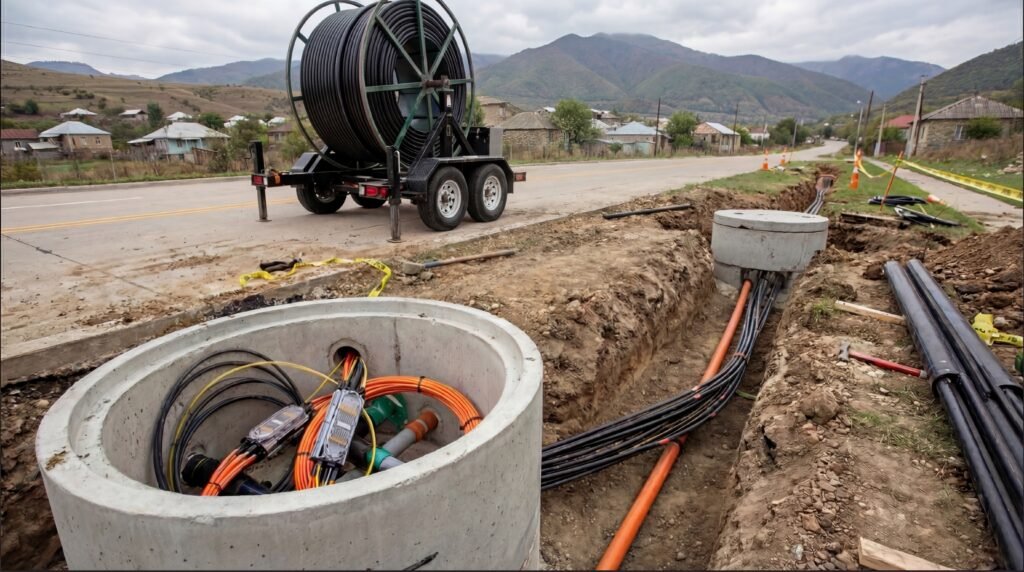
Construction of underground fiber-optic networks
Installation of poles in locations where cable infrastructure is not available
Installation and Configuration of Fiber-Optic Network Components
Establishment of fiber-optic cable joint and distribution points
Fiber-optic cable splicing (fusion splicing)
Installation and configuration of fiber-optic network components, including closures, passive boxes, optical patch panels, and related equipment
Installation of underground communication nodes
Testing and Diagnostics of Fiber-Optic Networks
Closure testing: verification of signal losses at splice points (splice loss measurement)
Passive box testing: assessment of signal distribution quality and attenuation within distribution boxes
Verification of fiber-optic cable integrity and quality using OTDR (Optical Time Domain Reflectometer) equipment to identify cable length, attenuation, faults, and other defects
Splitter testing: verification of splitting ratios and associated signal losses
Optical power measurement (Power Meter): measurement of optical signal levels at various network points to ensure sufficient signal strength for reliable operation
Fiber end-face inspection using a microscope: visual inspection of optical connectors for contamination or damage, which are common causes of signal attenuation